

Key takeaways
- Track cash weekly, not occasionally
- Separate essential from optional spending
- Speed up money coming in
- Negotiate early with key stakeholders
- Protect your strongest sources of cash
Cash pressure rarely arrives at a convenient time. It may follow a slow sales period, a supply disruption, rising interest costs, a lost customer, or the hard early years after startup.
This is your bi-weekly SME Entrepreneurs Newsletter with more in-depth analysis.
For family businesses and SME entrepreneurs, conserving cash is not about panic. It is about creating breathing room, protecting the core business, and making better decisions before the bank balance forces your hand.
Here are five practical ways to conserve cash in difficult conditions.
1. Know your cash position weekly
Profit matters, but cash keeps the doors open.
During adversity, review your cash position every week. Track cash in the bank, expected receipts, essential payments, payroll, tax obligations, loan repayments, and any high upcoming costs.
A simple 13-week cash flow forecast can be enough. It does not need to be perfect. It needs to show what is likely to happen if nothing changes.
This gives you time to act early. You can delay non-essential spending, speak with lenders, negotiate with suppliers, or chase overdue invoices before the pressure becomes urgent.
2. Separate essential spending from optional spending
When cash is tight, every dollar needs a job.
Go through your expenses line by line and divide them into three groups:
- Essential to keep trading
- Important, but adjustable
- Non-essential for now
Essential costs may include wages, critical stock, insurance, rent, key software, and compliance obligations. Adjustable costs may include marketing, contractors, travel, subscriptions, or planned upgrades. Pause or remove non-essential costs.
Be careful not to cut blindly. Some costs protect revenue. Others protect service quality. The goal is not to spend nothing. The goal is to spend only where it supports survival, stability, or near-term revenue.
3. Speed up cash coming in
Many businesses focus on cutting costs first. Often, the faster win is improving collections.
Send invoices promptly. Follow up overdue accounts earlier. Make payment terms clear. Offer easy payment methods. Consider deposits, progress payments, or shorter payment terms for new work.
For long-standing customers, a polite call can be more effective than another email. If a customer is struggling, agree on a payment plan rather than waiting indefinitely.

In family businesses, relationships matter. But relationships should not prevent disciplined cash collection. Good customers understand that your business also needs to be paid on time.
4. Negotiate before you are desperate
Suppliers, landlords, lenders, and tax authorities are usually easier to work with when you speak early.
If you can see a cash squeeze coming, start the conversation before you miss payments. Ask about extended terms, staged payments, temporary reductions, interest-only periods, or revised order quantities.
Register for TTCSI National Services Week
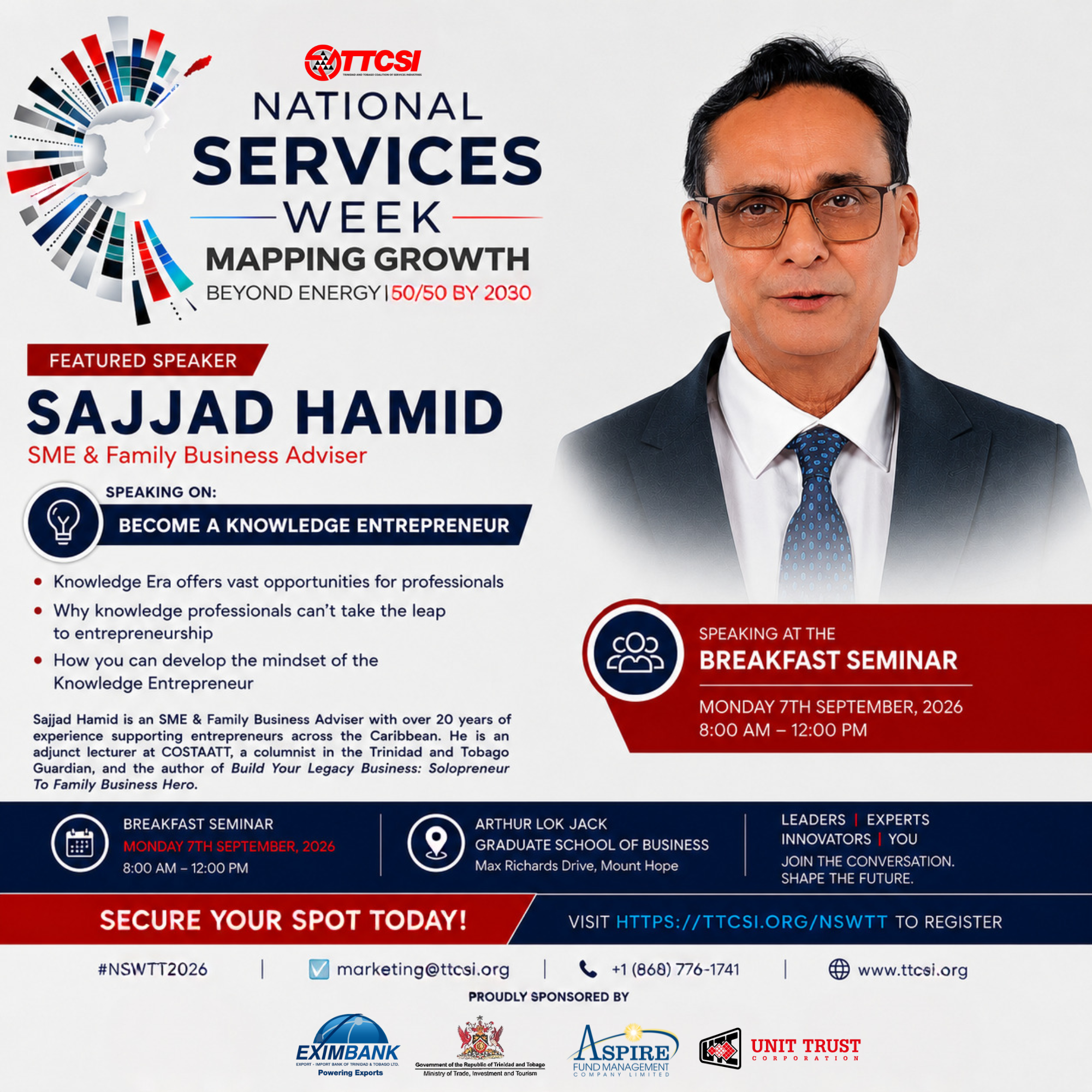
Register: https://ttcsi.org/
Come prepared. Explain the situation clearly, show what you can commit to, and follow through on any agreement.
This protects trust. It also gives the other party confidence that you are managing the business, not avoiding the problem.
5. Protect the revenue that matters most
Not all revenue is equal.
In difficult conditions, focus on customers, products, and services that generate reliable cash and healthy margins. Avoid tying up money in slow-moving stock, low-margin work, or customers who consistently pay late.
This may mean simplifying your offer, reducing complexity, or saying no to work that looks good on paper but drains cash in practice.
For many SMEs, conserving cash takes less than one dramatic cut and more disciplined decisions. Keep visibility high. Act early. Communicate clearly. Protect the parts of the business that generate cash.
Adversity tests every enterprise. Strong cash discipline can help your business endure the pressure and be ready when conditions improve.
Ask Sajjad
Fill out the contact form here.
See you in two weeks for another edition of your SME Entrepreneurs Newsletter. May you always have the mindset of an entrepreneur.


Sajjad Hamid is an SME & Family Business Adviser who supports entrepreneurs in scaling their ventures. In his spare time in Trinidad and Tobago, he cultivates organic tropical fruits and vegetables, practising sustainable farming in his home garden.
He is the author of Build Your Legacy Business: Solopreneur To Family Business Hero. Sajjad is a Fellow of the Family Firm Institute. He writes a column titled Entreprenomics in the Business section of the Trinidad and Tobago Guardian. You can contact him at [email protected] or visit www.entrepreneurtnt.com.

Responses