
Key takeaways
- Personal selling is not dead with complex and high-value offerings
- The Entrepreneur-Marketer model is based on entrepreneurial thinking
- Business development is key to closing deals
- Chemistry in meetings improves communication
- Persuasion science is founded on research
- Relationship-building can continue future sales
Personal selling, despite being clobbered by digital technologies, remains important for some products and services. This selling is important for business-to-business marketing (B2B), as relationships and complex offerings require specialized, customized, personalised, and well-trained marketers. Since business customers purchase hundreds of times as much as individual customers do, companies need a better sales system, especially when dealing with SMEs and family firms.
This is your bi-weekly SME Entrepreneurs newsletter with more in-depth analysis.
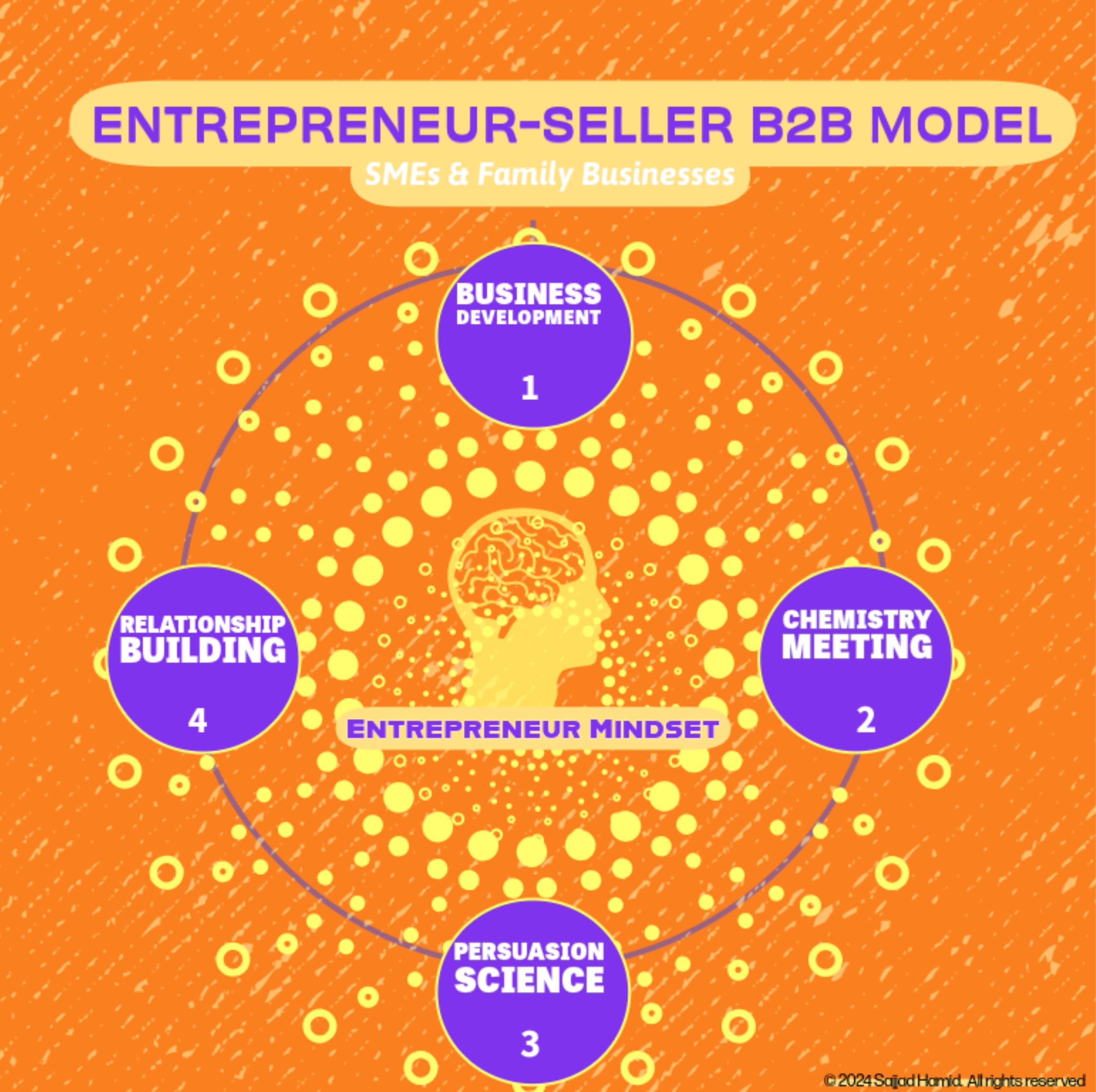
Selling online is much cheaper than training and selling through a sales professional. However, for industrial products and services that require specialized expertise and human touch, the first choice is a marketer who can build rapport with these high-growth entrepreneurial firms. One way is to structure your selling model around these business markets with an entrepreneurial mindset and use psychology to improve relationships. The entrepreneur-marketer B2B model gives sellers a significant edge over traditional sales models. This approach has at its core the entrepreneur's mindset, which influences other components: business development, chemistry in meetings, the use of persuasion science, and the method's relationship-building aspects.
Entrepreneurial mindset
One of the best marketing communication strategies is to adopt the mindset of entrepreneurial firms. These firms tend to have high growth rates and agile business models. They are managed by either a solopreneur (a dominant single CEO) or a business family whose collective entrepreneurial intelligence yields higher returns than their counterparts. These firms represent a lucrative market for sellers of industrial equipment, financial and professional services.
When sellers develop an entrepreneurial mindset, they can better understand and communicate with their clients. In addition, they can create more innovative offerings, as the marketer has a more creative problem-solving approach. This foundation part of the method influences all the other components.
Business development
Fusing sales and marketing make a good entrepreneurial marketer. Business development managers tend to be creative in their use of technology for prospecting. While outbound marketing means prospecting with good leads, getting prospects to trust you and come to you, it's where your selling gets a turbo charge. Some sellers use newsletters, webinars, website content and seminars to build their brands and differentiate their products. If someone clicks on their newsletter after being convinced of their expertise, a response can come from either a person or an AI chatbot.
Chemistry meeting
Business buyers are quite busy, and since SMEs and family firms tend to be lean structured, the busy CEO may take part in the purchasing process. You need to prepare and learn about the company so you can break the ice by showing appreciation for the founders' contributions and their families. Never fail to notice the family picture and engage the entrepreneur about his family.
While it is more psychology than chemistry, buyers like to trust first, and then they buy. Purchasers are suffering from too much choice and information overload. An entrepreneurial seller will try to hear the dreams of these SME owners and how they can support that vision. Often, marketers think it is just about value, but it is a whole basket of benefits, including product integration, service, and supply chain resilience.
To gain trust, marketers need to demonstrate expertise and confidence in the eyes of the buyer. If your inbound marketing (newsletters and social media) supports you, it is like the doors of the television series Star Trek. In other words, you are walking through an open door, which makes it easy to convince the prospect.
Persuasion science
Since numerous sellers heavily target organizational buyers, they cannot possibly deal with all of them. Buyers, therefore, show resistance to persuasion—put up a wall to avoid information overload and wasting their time. The entrepreneurial sellers should develop a “Star Trek” door approach. Make the buyer aware of your company and your credentials to start the conversation moving forward. While you need to be a conversationalist, business development is the name of the game.
Prospects buy when they can reduce their risk and get value for their company. When they know your brand and the other similar companies you sell to (when you can disclose this), it reduces the risk. Social proof and buying from someone regarded as an expert make the purchaser feel proud of their relationship with that expert, since they will come to that authority for advice.
Relationship building
In B2B marketing, buyers seldom engage in one-off transactions; it's more about long-term relationships. Selling to businesses can be dynamic. If you are selling insurance, you need to continuously assess the value of their property, inventories, and the lives of key people.
The lifetime value concept, when applied to individuals, yields a high future value. However, when it comes to businesses, the story is different. When thinking about family businesses, the goal is to continue the legacy across generations. This generational thinking should be factored into the selling equation. The marketer should not only develop a relationship with the current generation but also with the next. Generational selling is more complex as successors in family firms have different backgrounds and risk tolerances. One strategy is to bring them into meetings and have short talks with them. You have a better risk management strategy, as if your competitors know NextGen better than you; the product sales will move in the opposite direction.
B2B marketing does not have to be complicated for high-growth, entrepreneurial companies. SMEs and family firms are distinct organizations; therefore, buyer behaviour differs, as they have different mindsets and growth ambitions than bureaucratic firms. You must adapt your selling model if you are to be successful with these maverick companies.
See you in two weeks for another edition of your SME Entrepreneurs newsletter. May you always have the mindset of an entrepreneur.

Sajjad Hamid is an SME & Family Business Adviser who supports entrepreneurs in scaling their ventures. In his spare time in Trinidad and Tobago, he cultivates organic tropical fruits and vegetables, practising sustainable farming in his home garden.
He is the author of Build Your Legacy Business: Solopreneur To Family Business Hero. Sajjad is a Fellow of the Family Firm Institute. You can contact him at [email protected] or visit www.entrepreneurtnt.com.
Responses